
The Sacred Months in Islam
Added by : QFK Editorial Team
Published On : April 28, 2026
Islamic Date : 10 Dhul Qa'dah, 1446
Last Updated : April 28, 2026
Added by : QFK Editorial Team
Published On : April 28, 2026
Islamic Date : 10 Dhul Qa'dah, 1446
Last Updated : April 28, 2026
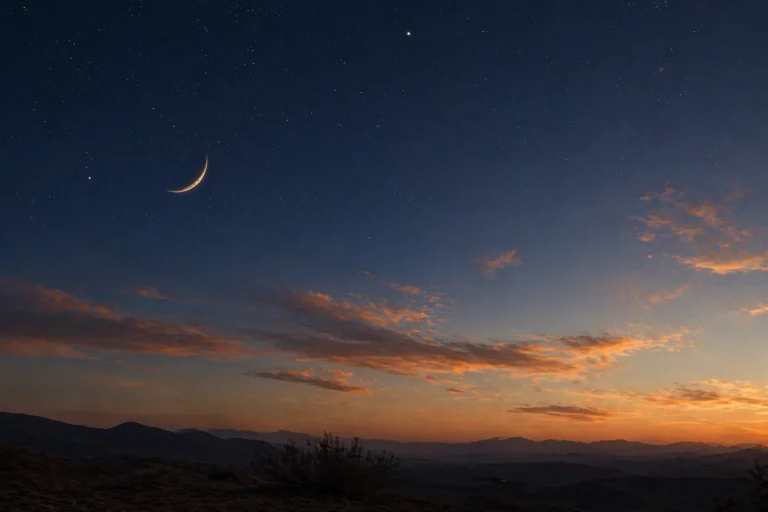
To understand the bigger picture first, read What Is Islam and Its Core Beliefs.
These months connect closely to the practices covered in The 5 Pillars of Islam.
One of the most rewarding of these months is covered in First Ashrah Dua Ramadan – A Guide to the First 10 Days of Mercy.
What Are the Sacred Months in Islam?
Time in Islam is not random. It is chosen, structured, and honored.
Out of the twelve months in the Islamic calendar, Allah Subhana Watala selected four months and gave them a special, sacred status. These are known as Ashhur al-Hurum, the sacred months.
In these months:
• The good deeds you do carry extra reward.
• Our sins are more serious.
• Injustice becomes spiritually heavier.
This is not symbolic. It is Allah Kareem’s system that trains the believer to become more aware of the actions they perform in everyday life.
For many Muslims living in the US or Europe, these months pass quietly. Work schedules, school routines, and daily stress make it easy to miss them. Living in a different culture from Islamic countries can also make this happen, and it is not your fault.
But missing them means missing opportunities to receive Allah Subhana Wataala’s blessings and mercy.
Sacred Months in Islam List
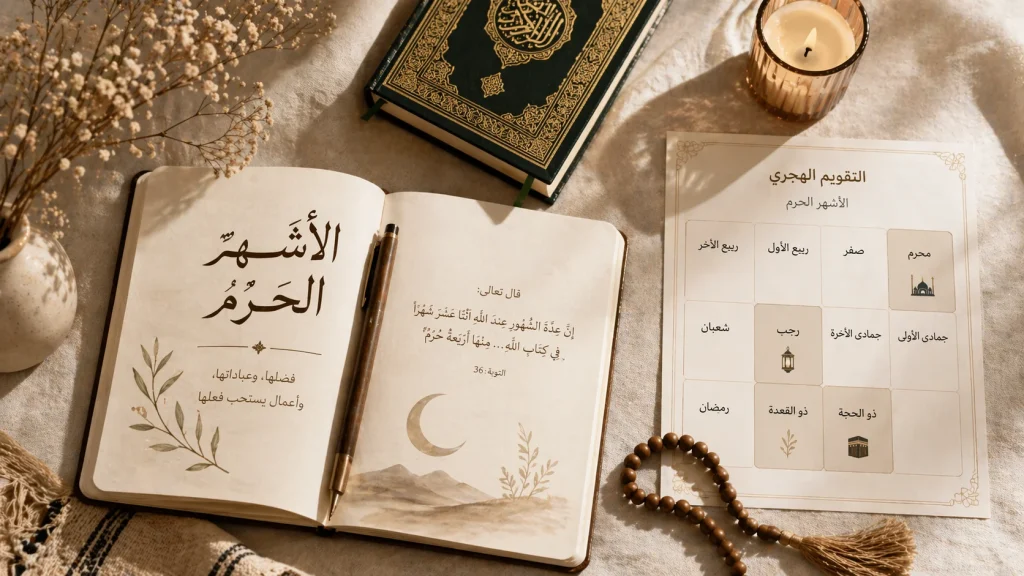
There are four sacred months in the Islamic year. Three come back to back, while Rajab stands alone.
Month | Type | Key virtue | What you should do |
Dhul Qadah | Sacred | Month of pause | Reflect, reduce distractions and prepare for Dhul Hijjah |
Dhul Hijjah | Sacred | Hajj and the best ten days | Increase Ibadah, charity and remembrance |
Muharram | Sacred | New year and Ashura | Fast, reflect and reset your direction |
Rajab | Sacred | Season of preparation | Clean up habits and build consistency |
The mention of these four months does not mean the rest of the year has no value. Every month carries its own importance and place in Islam.
Ramadan, without any doubt, is the most blessed month of the year.
But these four months were given a special status for a different reason.
Even before Islam, the people of Makkah, despite their disbelief, still recognized their honor and treated them with respect.
Ashhur al-Hurum Meaning Explained
The phrase Ashhur al-Hurum comes from Arabic:
• Ashhur = months
• Hurum = sacred, inviolable, protected
These are months in which:
• Fighting was prohibited.
• Spiritual discipline is emphasized.
• Actions carry more weight.
Even before Islam, Arabs respected these months. Islam did not invent them; it purified their purpose.
Why These Months Are Sacred
Quranic Evidence
إِنَّ عِدَّةَ الشُّهُورِ عِندَ اللَّهِ اثْنَا عَشَرَ شَهْرًا فِي كِتَابِ اللَّهِ ... مِنْهَا أَرْبَعَةٌ حُرُمٌ
“Indeed, the number of months with Allah is twelve ... of which four are sacred. So do not wrong yourselves during them.”
Reference: Surah At-Tawbah (9:36)
This ayah is not just informational; it is a warning.
“Do not wrong yourselves or do unjust to yourselves” means:
• Do not sin.
• Do not harm others.
• Do not neglect your soul.
Hadith Evidence
السَّنَةُ اثْنَا عَشَرَ شَهْرًا، مِنْهَا أَرْبَعَةٌ حُرُمٌ
The Prophet Muhammad ﷺ said: “The year is twelve months, of which four are sacred ...”
Reference: Sahih Bukhari; Sahih Muslim
This confirms the Allah Subhana Wataala’s structure of time in Islam.
Dhul Qadah Significance
Dhul Qadah is a quiet month.
Historically, battles stopped, and people prepared for Hajj. It was a time of pause.
Today, this pause is something many of us desperately need.
If you live in a fast-paced environment, like New York, London, or Toronto, life rarely slows down. But Dhul Qadah reminds you to create your own pause out of the busy life you live in the West.
Even in many Islamic countries, if you are not surrounded by the Islamic environment, you may skip the significance of this sacred month and get busy running your errands. Here is what you should do:
- Reduce unnecessary distractions.
• Reflect on your habits.
• Begin preparing for Ramadan mentally.
Spiritual growth does not begin suddenly; it begins with awareness.
Dhul Hijjah Sacred Month
This month carries immense weight.
It is not just another sacred month. It is a living reminder of submission, sacrifice, and trust in Allah Kareem.
It includes:
• Hajj (pillar of Islam).
• Eid ul Adha.
• The first 10 days, best days of the year.
مَا مِنْ أَيَّامٍ الْعَمَلُ الصَّالِحُ فِيهَا أَحَبُّ إِلَى اللَّهِ مِنْ هَذِهِ الْأَيَّامِ
“There are no days in which righteous deeds are more beloved to Allah than these ten days ...”
Reference: Sahih Bukhari
These days are not ordinary.
They carry the legacy of Hazrat Ibrahim عليه السلام, the Prophet who was tested in ways we can hardly imagine.
He was commanded to sacrifice his beloved son, Hazrat Ismail عليه السلام.
And both father and son submitted.
Not hesitation. Not delay. Not questioning.
Just submission.
Allah Kareem replaced that sacrifice with a great sacrifice and made this moment a lasting example for all generations to follow.
Why Qurbani Matters Today
Even today, millions of Muslims, especially in Asian countries like Pakistan, India, Bangladesh, and beyond, honor this legacy through Qurbani (animal sacrifice).
Homes become filled with activity. Children watch. Families gather. Meat is distributed.
But pause for a moment.
Qurbani is not just:
• An animal.
• A knife.
• Meat shared with others.
That is only the outer form.
The real Qurbani is deeper.
It is Jihad bil Nafs, the struggle against your own self.
Your ego. Your pride. Your reactions.
Real Qurbani is:
• Controlling your anger when someone speaks harshly.
• Forgiving when you have every right to respond.
• Helping someone when you feel tired.
• Letting go of arrogance when you feel superior.
• Sacrificing your ego for the sake of peace.
Anyone can sacrifice an animal.
But not everyone can sacrifice their nafs.
That is the Qurbani Allah SWT truly looks at.
Allah SWT makes this clear:
لَن يَنَالَ اللَّهَ لُحُومُهَا وَلَا دِمَاؤُهَا وَلَـٰكِن يَنَالُهُ التَّقْوَىٰ مِنكُمْ
“Neither their meat nor their blood reaches Allah, but what reaches Him is your taqwa.”
Reference: Surah Al-Hajj (22:37)
So Qurbani is not about what leaves your hand.
It is about what leaves your heart.
If You Are Not Performing Hajj
Many Muslims living in the US, UK, or Europe may feel distant from Hajj.
You see images. You watch videos. You feel something, but you are not there.
But you are not left out.
Allah SWT has opened doors for you right where you are.
You can still live these days fully.
You can:
• Fast (especially the Day of Arafah).
• Give charity.
• Recite Quran.
• Increase dhikr.
Even in a busy routine:
• On your commute.
• Between meetings.
• While cooking.
You can stay connected.
Simple Dhikr and Duas to Recite
During these days, keep your tongue alive with remembrance.
Simple Dhikr and Duas to Recite
During these days, keep your tongue alive with remembrance:
Takbeer: الله أكبر الله أكبر الله أكبر، لا إله إلا الله، والله أكبر الله أكبر ولله الحمد
Tahleel: لا إله إلا الله
Tahmeed: الحمد لله
Tasbeeh: سبحان الله
These are not heavy acts.
But in these days, they carry heavy reward.
The Day of Arafah (For Non-Hajjis)
This is one of the greatest opportunities of the entire year.
The Day of Arafah (for Non-Hajjis)
صِيَامُ يَوْمِ عَرَفَةَ أَحْتَسِبُ عَلَى اللَّهِ أَنْ يُكَفِّرَ السَّنَةَ الَّتِي قَبْلَهُ وَالسَّنَةَ الَّتِي بَعْدَهُ
“Fasting on the Day of Arafah expiates the sins of the previous year and the coming year.”
Reference: Sahih Muslim
This is one of the greatest opportunities of the entire year.
One fast.
Two years forgiven.
There are not many opportunities like this.
For Families and Children
These days are not just personal.
They are generational.
They are your chance to pass something real to your children.
Tell them the story of Ibrahim عليه السلام.
Let them see:
• You making dua.
• You giving charity.
• You remembering Allah.
Let them feel:
• The meaning of sacrifice.
• The beauty of giving.
• The value of submission.
This is how faith lives on.
A Simple Reminder
Even if you cannot do everything…
Do something.
Even:
• 10 minutes of dhikr.
• One sincere dua.
• One act of charity.
Because in these days, small deeds are not small.
They are multiplied.
And sometimes, one sincere moment can change everything.
Muharram Sacred Month Importance
Muharram marks the beginning of the Islamic year.
But unlike the typical idea of a “new year,” it is not a time of celebration.
It is a time of reflection, accountability, and realignment with Allah SWT.
It is also one of the Ashhur al-Hurum (the sacred months), a time where actions carry more weight and the believer is reminded to be more conscious.
Fasting in Muharram: A Special Opportunity
One of the greatest virtues of Muharram is fasting.
The Prophet Muhammad ﷺ said:
أَفْضَلُ الصِّيَامِ بَعْدَ رَمَضَانَ شَهْرُ اللَّهِ الْمُحَرَّمُ
“The best fasts after Ramadan are those of the month of Muharram.”
Reference: Sahih Muslim
This is powerful.
It means even though fasting in Muharram is not obligatory, it is among the most rewarding voluntary (nafl) fasts.
You don’t have to fast the whole month.
Even a few days carry great reward.
For Muslims living busy lives, this is a gift.
A chance to reconnect… without needing a complete lifestyle overhaul.
The Day of Ashura: A Day of Mercy
The most significant day in Muharram is the 10th, Ashura.
The Prophet ﷺ said:
The Day of Ashura: A Day of Mercy
صِيَامُ يَوْمِ عَاشُورَاءَ أَحْتَسِبُ عَلَى اللَّهِ أَنْ يُكَفِّرَ السَّنَةَ الَّتِي قَبْلَهُ
“Fasting on the Day of Ashura, I hope from Allah that it expiates the sins of the previous year.”
Reference: Sahih Muslim
One day.
One fast.
A year of sins forgiven.
The Story Behind Ashura
When the Prophet ﷺ migrated to Madinah, he found that the Jews were fasting on the 10th of Muharram.
They said this was the day when Allah saved Sayyidina Musa عليه السلام and his people from Pharaoh.
The Prophet ﷺ responded:
“We are closer to Musa than you.”
And he encouraged the Muslims to fast on this day.
This shows something beautiful:
Ashura is not just about fasting.
It is about recognizing Allah’s help, mercy, and the victory of truth over Cruelty.
How to Fast Ashura Properly
The Prophet ﷺ advised that we should not fast only the 10th.
He recommended:
• 9th and 10th.
OR
• 10th and 11th.
This was to distinguish the Muslim practice.
Important Clarification
Over time, many misconceptions became attached to Ashura.
There is no authentic basis that:
• Adam عليه السلام was created on this day.
• Ibrahim عليه السلام was born on this day.
• Special rituals or meals are required.
These are later additions, not supported by authentic sources.
Islam keeps things simple.
No invented practices.
No exaggeration.
Karbala and the Martyrdom of Imam Hussain
Muharram is also deeply connected to the tragic martyrdom of Sayyidina Imam Hussain رضي الله عنه in Karbala.
This is one of the most painful events in Islamic history.
He stood for truth.
He refused to bow to falsehood.
He chose dignity over compromise.
And this is a lesson for every Muslim:
Stand for truth, even when it is difficult.
Submit only to Allah, not to pressure.
The sanctity of Ashura does not come from this event.
Ashura was already established as a sacred and significant day during the time of the Prophet ﷺ, long before Karbala.
The martyrdom of Imam Hussain رضي الله عنه certainly adds a deep emotional connection to this day.
But the spiritual importance of Ashura was already established during the time of the Prophet Muhammad ﷺ. This event, while powerful, does not define the day itself.
A Simple Takeaway
Muharram teaches us:
• Reflection over celebration.
• Truth over pressure.
• Sincerity over emotion without guidance.
• Submission over ego.
And in today’s world, full of noise, pressure, and confusion, this message is more relevant than ever.
For Muslims Living in the West
If you live in the US, UK, or Europe, Muharram can pass quietly.
So keep it simple:
• Fast Ashura (or 9th + 10th).
• Spend a few minutes in dhikr.
• Reflect on your direction in life.
Because sometimes…
One sincere action in a sacred month
can change the direction of your entire year.
Rajab Sacred Month Explained
Rajab is the seventh month of the Islamic calendar and one of the sacred months (Al-Ashhur al-Ḥurum), a time that has always carried weight and respect, even before Islam.
It also quietly marks the beginning of a journey… leading us toward Ramaḍan.
The Prophet ﷺ would welcome it with a simple, meaningful dua.
اللهم بارك لنا في رجب وشعبان وبلغنا رمضان
“O Allah, bless us in Rajab and Shaban, and allow us to reach Ramadan.”
What Makes Rajab Special
Rajab is a sacred month, but it’s important to understand how.
It’s not about special nights, fixed rituals, or specific acts of Ibadah.
In fact:
There is no authentic evidence that the Shariah prescribed any specific Ibadah for Rajab.
That means:
• No special salah tied to certain nights.
• No fixed fasts unique to the month.
• No ceremonies established by the Prophet ﷺ.
Rajab’s value is real, but it’s general, not ritual-specific.
Many people associate Rajab with the night of Miraj, often marking the 27th night.
But when you look closely:
• The exact date of Miraj is not definitively known.
• Scholars have mentioned different months and opinions.
• The Prophet ﷺ never celebrated it.
• The Ṣaḥabah رضي الله عنهم never treated it as a special night.
That alone tells you something important.
Not every great event in Islam was meant to become a yearly ritual.
A Principle We Can’t Ignore
Islam is very clear when it comes to celebrations and religious practices.
We’ve only been given:
• Eid al-Fiṭr.
• Eid al-Aḍḥa.
And both are tied directly to acts of Ibadah, not historical anniversaries.
So, when something becomes a “special night” or “special practice” without clear proof, it needs to be paused and questioned.
Fasting in Rajab
You might hear about fasting on the 27th of Rajab.
Here’s the reality:
• The narrations about its special virtue are weak.
• Scholars have not accepted them as reliable.
But at the same time:
You can fast in Rajab. You can increase Ibadah. Just don’t attach special virtue to a specific date without proof.
But Islam was never built on feelings or tradition alone. It was built on revelation.
So What Should Rajab Be? Rajab isn’t a month of ceremonies. It’s a month of realignment.
A quiet preparation before Shaban… and then Ramaḍan.
So instead of searching for:
• Special nights.
• Specific formulas.
• Fixed ceremonies.
Focus on:
• Cleaning up your habits.
• Increasing consistency in Ibadah.
• Getting ready for Ramaḍan properly.
Final Thought
Rajab is honored, but not complicated. It doesn’t need to be filled with invented practices to feel meaningful. Sometimes, the most authentic approach is also the simplest one.
Good Deeds in Sacred Months
These months are multipliers.
Even small actions become heavy on the scale.
Focus on:
• Salah on time.
• Quran recitation.
• Charity.
• Dhikr.
This is your time for seeking recovery in sacred months.
You do not need perfection.
You need consistency.
Fasting in Sacred Months
Fasting is a powerful Ibadah.
Especially:
• Muharram (Ashura).
• Voluntary fasts.
If you work long hours, start small:
• One fast.
• Then build gradually.
Islam is not about burden. It is about balance.
Avoiding Sins in Sacred Months
This is often overlooked.
But it is the core message.
Avoid:
• Backbiting.
• Anger.
• Dishonesty.
In Western life, this can be challenging:
• Workplace pressure.
• Social environments.
• Digital distractions.
But sacred months train you to stay conscious, even when it is difficult.
Living in the West: How to Stay Connected
Many Muslims in the US and Europe struggle with awareness.
Islamic months are not on office calendars.
Life moves fast.
Here is what helps:
Simple steps:
• Use an Islamic calendar app.
• Set reminders for sacred months.
• Plan small acts of worship.
Even:
• 5 minutes of dhikr during commute.
• Listening to Quran while driving.
These small changes reconnect you with sacred time.
Living in the West: How to Stay Connected
Many Muslims in the US and Europe struggle with awareness.
Islamic months are not on office calendars.
Life moves fast.
Here is what helps:
Simple steps:
• Use an Islamic calendar app.
• Set reminders for sacred months.
• Plan small acts of worship.
Even:
• 5 minutes of dhikr during commute.
• Listening to Quran while driving.
These small changes reconnect you with sacred time.
How Parents Can Teach Children About Sacred Months
Children do not learn through lectures.
They learn through experience.
Try:
• Weekly family Islamic time.
• Simple storytelling.
• Rewarding small good deeds.
Many parents today also choose structured learning.
At Qari for Kids, children learn Quran online with certified male and female teachers from Al-Azhar University. This builds understanding, discipline, and love for Islam from a young age, especially important for families growing up in non-Muslim environments.
Practical Ways to Maximize These Months
Keep it simple.
Daily:
• Short dhikr.
• One good deed.
Weekly:
• Fast once.
• Give charity.
Personally:
• Reflect on habits.
And most importantly:
Keep making dua for spiritual growth.
Give Your Child the Gift of the Quran This Ramadan
Start Online Quran Classes at Qari For Kids
1-on-1 certified tutors. Flexible scheduling around Ramadan hours. Free trial for families in USA, UK, Canada & Australia.
Give Your Child the Gift of the Quran This Ramadan
Start Online Quran Classes at Qari For Kids
1-on-1 certified tutors. Flexible scheduling around Ramadan hours. Free trial for families in USA, UK, Canada & Australia.
Conclusion
The sacred months are not just dates. They are opportunities.
In a busy world, they remind you to pause.
To reflect. To reconnect.
You do not need to change everything overnight.
Just start small. Because in these months, even small steps are multiplied.
Featured Blogs
- Quran recitation for peace - A simple guide to calm the heart
- 10 Ways to teach kids about the mercy of ramadan
- What is Ramadan Mercy-Simple Stories for Kids
- The Path to Hifz – Quran Memorization Techniques and Rewards
- Seeking Forgiveness in Second Ashrah – Days of Maghfirah
- Second Ashrah Dua Ramadan – Days of Forgiveness
AUTHORED BY
Qari For Kids Editorial Team
Certified Quran & Arabic Educators
Our team of Ijazah-certified Qaris brings together over a decade of teaching Quran to children and adults across the USA, UK, Canada, and Australia.
- Ijazah-certified tutors
- 10,000+ students taught
- Reviewed by Islamic scholars
- Ijazah-certified tutors
Main Courses
Follow Us On:
Frequently Asked Questions
What are the four sacred months in Islam?
Dhul Qadah, Dhul Hijjah, Muharram and Rajab.
Why are the sacred months important?
Because Allah names them as sacred in Quran 9:36 and instructs believers not to wrong themselves during them.
Can we fast in the sacred months?
Yes. Fasting is especially emphasised in Muharram, and voluntary fasting can be a beneficial way to increase worship during sacred times.
Is Ramadan a sacred month?
Ramadan is not one of the four sacred months, but it is the most blessed month of the year.
Is Rabi al-Awwal a sacred month?
It is not among the four sacred months. Many Muslims give it attention because of its association with the life of the Prophet ﷺ, but it is not named among the sacred months in Quran 9:36.
What should Muslims avoid in the sacred months?
All forms of sin, especially injustice, backbiting, dishonesty and harming others.
Editorial Note: The views and guidance in this article are drawn from established Islamic scholarly tradition and are intended for general educational purposes. Individual circumstances vary — for specific fiqh questions about fasting for children or those with health conditions, please consult a qualified Islamic scholar. Qari For Kids is an educational platform and does not issue religious rulings.
Explore Other Blogs
In this article, we will look closely at each pillar, explain what it means, share their Arabic names, and highlight guidance from the…
What Is Islam? The word “Islam†comes from the Arabic root S-L-M, which signifies peace, submission, and safety…
Written & Reviewed by Mufti Habib Ahmed Mufti Habib Ahmed is a Dars‑e‑Nizami graduate from Jamia Farooqia Karachi…