
Who Is the World's Best Man?
Added by : QFK Editorial Team
Published On : Sept 23, 2026
Islamic Date : 9 Rabi al-Thani 1448 AH
Last Updated : Sept 23, 2026
Added by : QFK Editorial Team
Published On : Sept 23, 2026
Islamic Date : 9 Rabi al-Thani 1448 AH
Last Updated : Sept 23, 2026
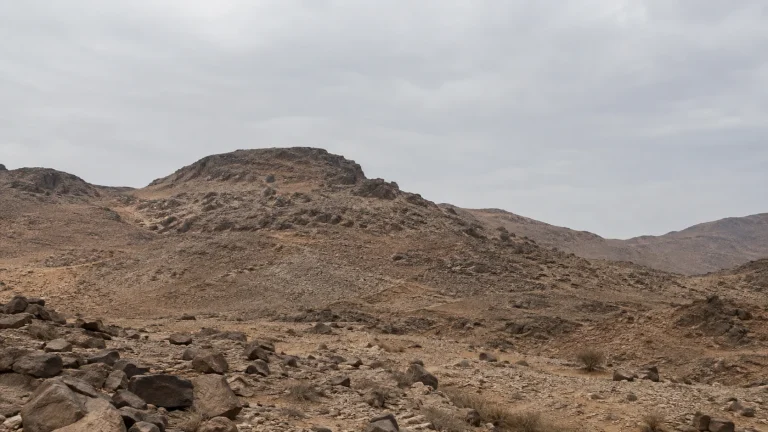
Who Is the World's Best Man?
Who is the world’s best man? According to Islam, it is Prophet Muhammad ﷺ — regarded by Muslims as the best person in history. The Quran describes his character as “great” (68:4) and calls him a mercy to the worlds (21:107), making him the ultimate role model for every generation.
Table of Contents
- What Does “Best Man” Actually Mean in Islam?
- The Quran’s Own Testimony About Him
- From Orphan to Al-Amin: The Man Before Prophethood
- Perspectives From Western and Non-Muslim Historians
- A Life Tested by Hardship, Answered With Mercy
- Sending Durood: Why We Still Honor Him Today
- Him as an Example for Us Today
- Conclusion: The Best of Creation
- FAQs
The Islamic Standard of Human Perfection
A title worth admiring for anyone who truly understands it.
“Best” here doesn’t mean richest, most powerful, or most famous. It means highest in character, mercy, and role model in Islam.
For billions of Muslims, Hazrat Muhammad ﷺ isn’t just one of the best — he’s the best, in every sense the word can carry. His life stands as the finest example for us to follow.
And in the Quran, Allah leaves no room for doubt, declaring:
“Indeed, you are of a great moral character.” (68:4)
The Quran’s Own Testimony About Him
If anyone’s testimony settles the question of who the best man really is, it’s Allah’s own.
In Surah Al-Anbiya, He says:
“And We have not sent you except as a mercy to the worlds.” (21:107)
— mercy to mankind, not limited to any one people or place.
And in Surah Al-Ahzab:
“Indeed, in the Messenger of Allah you have an excellent example.” (33:21)
— the very reason Muslims treat him not just as someone to admire, but as their role model in Islam.
His name comes up many times throughout the Quran. Muslims view him as the final messenger of God and the ultimate example of human character, leadership, and compassion.
These aren’t just verses about him — they’re a window into glorifying the One who sent the world’s best man, since every word here is Allah’s own testimony.
The Prophet ﷺ himself said:
“I have only been sent to perfect good character.” (Al-Adab Al-Mufrad, Hadith 273)
From Orphan to Al-Amin: The Man Before Prophethood
His character came before his prophethood. Long before revelation, he was already the man he’d be known for.
Born in Makkah, 570 CE. Orphaned before birth — his father was gone. His mother died when he was six. His grandfather raised him. Then his uncle, Abu Talib.
No wealth. No protection. Yet Makkans still trusted him more than anyone else. They called him Al-Amin — the Trustworthy. And As-Sadiq — the Truthful. Even his enemies left their valuables with him.
Aisha (RA) said it best:
“The trait the Prophet ﷺ hated most was lying.” (Tirmidhi 1973)
Allah answered that directly in the Quran:
“It is not you they deny.” (6:33)
The Prophet ﷺ didn’t just live this — he taught it too:
“Return the trust to the one who entrusted you, and do not betray the one who betrays you.” (Tirmidhi 1264)
A Trust Kept, Even From Enemies
On the night he fled Makkah to save his life, with enemies surrounding his house, he still left Ali (RA) behind — with one final task. Return every valuable the Makkans had deposited with him for safekeeping. Even though they were the same people trying to kill him that very night.
He lost both parents by six. So his love for orphans wasn’t theory — it was personal.
He said:
“I and the guardian of an orphan will be together in Paradise,” joining two fingers. (Sahih al-Bukhari)
He married Khadijah (RA) at 25. Stayed monogamous for 25 years — unheard of for a man of his standing.
This is why he’s a role model in Islam. Not because prophethood made him great. Because he already was.
Perspectives From Western and Non-Muslim Historians
Strip away faith completely, and the case still holds.
Michael H. Hart, an American astrophysicist and historian, ranked him number one in The 100 — above Jesus, Newton, and Buddha. Not for religious reasons. Because he succeeded uniquely in both the religious and secular realms at once.
To Muslims, this isn’t news. It’s just outsiders catching up to what they’ve believed for 1,400 years.
Washington Irving, the American writer, described him this way:
“He was to the last the prophet of the one true God, and his task was to abolish all idolatry.” (Mahomet and His Successors)
Alphonse de Lamartine, the French historian and poet, went further:
“If greatness of purpose, smallness of means, and astounding results are the three criteria of human genius, who could dare to compare any great man in modern history with Muhammad?” (Histoire de la Turquie)
Even his enemies couldn’t deny it. Abu Jahl admitted he wasn’t a liar — he simply refused the message.
This is why he’s still called the best person in history. Every praise Muslims give him ultimately points back to Allah — the One who sent him.
To understand this, you have to see it as praise of the Creator who chose him, not praise of the man alone.
A Life Tested by Hardship, Answered With Mercy
Ta’if turned on him. A mob stoned him out of the city.
An angel offered to crush it between two mountains. He refused. Prayed for their descendants instead.
Then came Makkah, 630 CE. The same people who tortured his followers. Who killed his family. Now fully in his power.
He forgave them all. A general amnesty, at the very height of his strength — the moment revenge would’ve been easiest.
Even under provocation, he never lost control. He didn’t curse. Didn’t swear. If he wanted to correct someone, he’d simply say, “What is wrong with him — may dust be on his forehead!” (Sahih Bukhari 6031)
He never struck a servant. Never struck a woman in anger. Anas (RA), who served him for ten years, said he never even heard a harsh word from him. (Sahih Bukhari 6038, Sahih Muslim 2309)
This is the real test of character. Not how someone acts when they’re weak — but what they choose when they hold all the power.
It’s exactly what the qualities of Prophet Muhammad ﷺ were built on — mercy, even when mercy wasn’t owed.
Sending Durood: Why We Still Honor Him Today
It’s the dua every Muslim knows. Durood — sending blessings and mercy upon the Prophet ﷺ.
Allah didn’t leave it optional. He commanded it Himself:
“Indeed, Allah and His angels send blessings upon the Prophet. O you who believe, send blessings upon him and greet him with peace.” (Surah Al-Ahzab 33:56)
Think about that. Allah and the angels do it first. Only then are Muslims told to do the same — mercy on the very man who was sent as mercy to mankind.
Short form:
“Allahumma Salli Ala Muhammad”
(O Allah, send Your mercy upon Muhammad ﷺ)
Durood Ibrahim — recited in every prayer, five times a day:
“Allahumma salli ala Muhammadin wa ala aali Muhammad, kama sallayta ala Ibrahima wa ala aali Ibrahim…”
Say it once, and Allah sends mercy on you ten times back. (Sahih Muslim 408)
Fridays carry extra weight. The Prophet ﷺ said:
“The best of your days is Friday… so send abundant blessings upon me on this day, as your blessings are presented to me.” (Abu Dawud 1047)
Open a dua with durood, close it with durood — it’s one of the surest ways a dua gets accepted.
Even now, centuries later, this is how the ummah keeps honoring one of the finest qualities of Prophet Muhammad ﷺ — a mercy so complete, even Allah asks us to bless him back.
Him as an Example for Us Today
Somewhere along the way, we started losing our own Deen — slowly, without even noticing.
We’ve left the Quran on the shelf. We recite it, sometimes. We rarely understand it.
This is where it has to start — with our children. Before anything else, a child should learn to read the Quran, and learn what it means. That’s the whole reason academies like Qari For Kids exist.
The Messenger of Allah ﷺ isn’t just someone to admire from a distance. He’s someone to follow — in how he acted, not just what he said.
He was the helper. The promise-keeper. The rights-giver. The protector of women. The gentle one with animals. The forgiver. The patient teacher. He worshipped Allah till his last breath. Even in his final sermon, he was still guiding a Ummah he wouldn’t live to see grow.
He told us exactly what to hold on to after he was gone:
“I have left two things among you. As long as you hold to them, you will never go astray — the Book of Allah, and the Sunnah of His Prophet.” (Muwatta Malik 1628)
That’s it. That’s the whole instruction. The Quran, and his example — this is what makes him the true role model in Islam.
Conclusion: The Best of Creation
We started with a question. Who is the world’s best man?
The Quran answered first — a mercy to the worlds, a character called great by Allah Himself.
History answered too. Even his fiercest enemies called him truthful. Even non-Muslim historians ranked him above kings and conquerors.
His own life answered loudest. An orphan who became the most trusted man in Makkah. A leader who forgave the people who tried to kill him. A husband, a neighbor, a friend — the same man in every role, never one version in public and another in private.
This is why he’s still called the best person in history — not because Muslims say so, but because everything he did, every day of his life, proved it.
And it’s why his example still matters today. Not just to read about. To live by.
Give Your Child the Gift of the Quran This Ramadan
Start Online Quran Classes at Qari For Kids
1-on-1 certified tutors. Flexible scheduling around Ramadan hours. Free trial for families in USA, UK, Canada & Australia.
Give Your Child the Gift of the Quran This Ramadan
Start Online Quran Classes at Qari For Kids
1-on-1 certified tutors. Flexible scheduling around Ramadan hours. Free trial for families in USA, UK, Canada & Australia.
Featured Blogs
- Quran recitation for peace - A simple guide to calm the heart
- 10 Ways to teach kids about the mercy of ramadan
- What is Ramadan Mercy-Simple Stories for Kids
- The Path to Hifz – Quran Memorization Techniques and Rewards
- Seeking Forgiveness in Second Ashrah – Days of Maghfirah
- Second Ashrah Dua Ramadan – Days of Forgiveness
AUTHORED BY
Qari For Kids Editorial Team
Certified Quran & Arabic Educators
Our team of Ijazah-certified Qaris brings together over a decade of teaching Quran to children and adults across the USA, UK, Canada, and Australia.
- Ijazah-certified tutors
- 10,000+ students taught
- Reviewed by Islamic scholars
- Ijazah-certified tutors
Main Courses
Follow Us On:
Frequently Asked Questions
Why Is Prophet Muhammad ﷺ the Best Person in History?
Prophet Muhammad ﷺ is known as the best person in history because of his amazing honesty, kindness, and
leadership. He was always fair, cared deeply for others, and lived a life that inspired millions of people. Even non-
Muslim historians, like Michael H. Hart, placed him at number one on their lists of the most influential people who
ever lived!
What the Quran Says About Prophet Muhammad Character
Surah Al-Qalam (68:4) calls him a man "of great moral character," and Surah Al-Anbiya (21:107) calls him "a
mercy to the worlds" — praise given to no one else.
Why Is Prophet Muhammad ﷺ Called a Mercy to Mankind?
Surah Al-Anbiya (21:107) states he was sent as “a mercy to the worlds” — the Quran’s clearest description of him as
a mercy to mankind.
What Makes Prophet Muhammad a Role Model in Islam?
His consistency — as husband, leader, neighbor, and judge — is why Muslims see him as the ultimate role model in
Islam, not just in one area of life.
What Are the Qualities of Prophet Muhammad?
Trustworthiness (Al-Amin), truthfulness (As-Sadiq), mercy, justice, and humility even at the height of power —
together, the core qualities of Prophet Muhammad ﷺ.
Editorial Note: The views and guidance in this article are drawn from established Islamic scholarly tradition and are intended for general educational purposes. Individual circumstances vary — for specific fiqh questions about fasting for children or those with health conditions, please consult a qualified Islamic scholar. Qari For Kids is an educational platform and does not issue religious rulings.
Explore Other Blogs
In this article, we will look closely at each pillar, explain what it means, share their Arabic names, and highlight guidance from the…
What Is Islam? The word “Islam†comes from the Arabic root S-L-M, which signifies peace, submission, and safety…
Written & Reviewed by Mufti Habib Ahmed Mufti Habib Ahmed is a Dars‑e‑Nizami graduate from Jamia Farooqia Karachi…