
Surah Baqarah: Virtues, Meaning and How to Memorise It
Added by : QFK Editorial Team
Published On : Nov 1, 2026
Islamic Date : 20 Jumada al-Awwal 1448 AH
Last Updated : Nov 1, 2026
Added by : QFK Editorial Team
Published On : Nov 1, 2026
Islamic Date : 20 Jumada al-Awwal 1448 AH
Last Updated : Nov 1, 2026
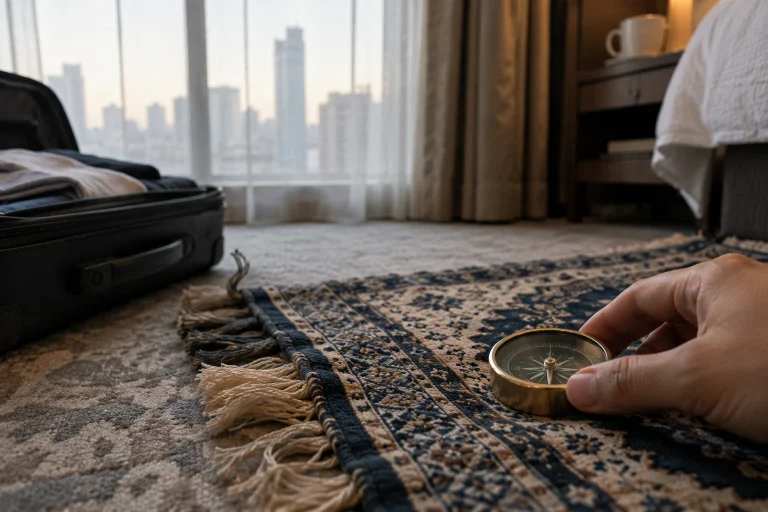
Surah Baqarah is the second and longest surah of the Quran, with 286 ayat, revealed in Madinah and named after the cow in Bani Israel’s story. It holds Ayatul Kursi (2:255), the last two ayat, the change of Qibla, and laws on fasting, Hajj and riba.
Your Roadmap Through the Longest Surah
- The Cow and the Big Idea — what the surah is
- Why Shaytan Avoids This Home — the virtues
- The Verse Called Greatest — ayat 255
- Two Ayat Before You Sleep — the last 2 ayat
- Four Stories That Still Speak — Adam to Dawud
- The Day the Qibla Turned — the big change
- Laws for Real Life — Ramadan to riba
- Duas Hidden Inside — two famous duas
- What Bani Israel Teach Us — life lessons
- One Page a Day — how to memorise
- Takeaway: Surah Baqarah in One Breath — the heart of it
1. The Cow and the Big Idea
Surah Baqarah is the second chapter of the Quran.
It has 286 verses, which makes it the longest surah.
It covers all of Juz 1 and 2 and the start of Juz 3.
It was revealed in Madinah, bit by bit over several years. Ayah 281 is reported to be among the last verses revealed.
The name means “The Cow.” It comes from the story of Bani Israel and the cow (2:67–73).
But the cow is one small part of a surah about what true belief looks like.
It also holds the longest ayah of the Quran, 2:282, about writing down debts.
The surah answers Surah Al-Fatiha too. Fatiha asks Allah for the straight path. Baqarah opens with the reply:
ذَٰلِكَ الْكِتَابُ لَا رَيْبَ ۛ فِيهِ ۛ هُدًى لِّلْمُتَّقِينَ
“This is the Book about which there is no doubt, a guidance for those conscious of Allah.”
Surah Al-Baqarah 2:2
It is also called al-Zahra, “the radiant,” and Fustat al-Quran, “the canopy of the Quran,” for its wide range of themes.
You may already know Ayatul Kursi by heart. There are 285 more verses around it.
2. Why Shaytan Avoids This Home
Why does Shaytan run from one surah in particular?
The Prophet ﷺ answered:
“Do not turn your houses into graveyards. Shaytan runs away from the house in which Surah Al-Baqarah is recited.”
— Muslim 780
A pleader on Judgment Day → The Prophet ﷺ said:
“Recite the Quran, for on the Day of Resurrection it will come as an intercessor for those who recite it.”
— Muslim 804a
In the same hadith he named Baqarah and Surah Al Imran, the two radiant surahs, and said they will plead for their readers.
He called taking up Baqarah a blessing, and leaving it a cause of grief.
3. The Verse Called Greatest
The Prophet ﷺ once asked Ubayy ibn Ka’b which verse in Allah’s Book is the greatest.
Ubayy answered with these words:
اللَّهُ لَا إِلَٰهَ إِلَّا هُوَ الْحَيُّ الْقَيُّومُ
“Allah, there is no god but Him, the Ever-Living, the Sustainer of all.”
Surah Al-Baqarah 2:255; Muslim 810
This verse, surah baqarah ayat 255, is known as Ayatul Kursi.
It names Allah as Al-Hayy, the Ever-Living, and Al-Qayyum, the One who sustains everything.
Scholars differ on what the Kursi is, a real creation below the Throne or Allah’s knowledge, but both views point to Allah’s greatness.
Learn With Understanding
Recite with correct tajweed and know what every word means. Try a class with a certified Al-Azhar teacher at qariforkids.com.
4. Two Ayat Before You Sleep
The surah baqarah last 2 ayat are 2:285 and 2:286.
The Prophet ﷺ said:
“Whoever recites the last two verses of Surah Al-Baqarah at night, they will suffice him.”
— Bukhari 5009
What does “suffice” mean?
Scholars read it as night worship, protection from Shaytan, protection from harm, or all of these together.
Why do these ayat feel so light?
Verse 2:284 says Allah will hold us to account for what is in our hearts. The companions found this heavy. The Prophet ﷺ told them to say, “We hear and we obey.” They did, and Allah revealed 2:285–286, which lifted the burden of passing thoughts.
Now think of how a long day ends: unfinished work, words you wish you had said differently.
These ayat close that day with a dua:
لَا يُكَلِّفُ اللَّهُ نَفْسًا إِلَّا وُسْعَهَا ۚ لَهَا مَا كَسَبَتْ وَعَلَيْهَا مَا اكْتَسَبَتْ ۗ رَبَّنَا لَا تُؤَاخِذْنَا إِن نَّسِينَا أَوْ أَخْطَأْنَا
“Allah does not burden a soul beyond what it can bear. It will have what it earned, and it will bear what it earned. Our Lord, do not hold us to account if we forget or make mistakes.”
Surah Al-Baqarah 2:286
Scholars differ: some say these ayat were given at the Miraj, others in Madinah.
5. Four Stories That Still Speak
Read together, these four stories walk one road: how a person falls, how a community drifts, how a servant submits and how a small group stands.
Adam: what do you do after a slip? → Everyone knows the feeling of a mistake they wish they could undo. Shaytan’s temptation led Adam to slip, but he repented and Allah accepted it.
Bani Israel: what do you do with a blessing? → Adam repented. They kept drifting. Allah saved them at the sea and forgave them after the golden calf, yet the manna and quail, the water from the rock and the cow all followed. Think of a blessing you stopped noticing, like health or a roof over your head.
Ibrahim: what does full submission look like? → Where Bani Israel failed their tests, Ibrahim passed every one. Told to submit, he replied, “I submit to the Lord of the worlds.” With Ismail he raised the Kaaba.
Talut and Jalut: do numbers decide victory? → Faith is hardest when you are outnumbered. A small army met Jalut’s large one, and Dawud (peace be upon him) defeated Jalut by Allah’s permission.
Adam shows how to come back. Bani Israel shows how not to drift. Ibrahim shows the aim. Talut’s small army shows what trust looks like under pressure.
(Surah Al-Baqarah 2:30–251)
6. The Day the Qibla Turned
In Madinah, the Prophet ﷺ first prayed towards Bayt al-Maqdis in Jerusalem. He did so for sixteen or seventeen months. (Bukhari 40)
Imagine praying one way for over a year, then being asked to turn.
Then Allah turned the believers towards the Kaaba in Makkah (2:142–150).
The Prophet ﷺ had been hoping for it. Allah says He saw him turning his face towards the sky (2:144).
فَوَلِّ وَجْهَكَ شَطْرَ الْمَسْجِدِ الْحَرَامِ ۚ وَحَيْثُ مَا كُنتُمْ فَوَلُّوا وُجُوهَكُمْ شَطْرَهُ
“So turn your face towards al-Masjid al-Haram. Wherever you are, turn your faces towards it.”
Surah Al-Baqarah 2:144
Some people mocked the change. Allah answers them in the same passage (2:142).
What did the change teach?
- A test of obedience → It showed who truly follows the Messenger (2:143).
- Ibrahim’s legacy → The new direction tied the ummah to the Kaaba Ibrahim and Ismail built.
- A balanced community → Allah calls this ummah a “just community” (2:143).
7. Laws for Real Life
Many of us first meet this surah in Ramadan. Ayah 185 explains why the month is special:
شَهْرُ رَمَضَانَ الَّذِي أُنزِلَ فِيهِ الْقُرْآنُ هُدًى لِّلنَّاسِ
“The month of Ramadan is the one in which the Quran was revealed, a guidance for mankind.”
Surah Al-Baqarah 2:185
Baqarah is the first surah with detailed rulings, and they cover worship, family and money.
- Fasting → 2:183–187.
- Hajj and Umrah → 2:196–203, plus 2:158 for Safa and Marwa.
- Family → Marriage, divorce, breastfeeding and wills.
- Money → Charity (2:261–274), riba (2:275–281) and written debts (2:282).
The longest verse of the Quran is about putting a loan in writing. That says a lot about how much honest money dealing matters.
Riba is not a distant topic. It sits inside loans many families take.
Step by step → Wine and gambling are first mentioned at 2:219, an early step in their gradual prohibition.
And one line worth knowing is:
لَا إِكْرَاهَ فِي الدِّينِ ۖ قَد تَّبَيَّنَ الرُّشْدُ مِنَ الْغَيِّ
“There is no compulsion in religion. Right guidance has become clear from error.”
Surah Al-Baqarah 2:256
8. Duas Hidden Inside
Two more duas from Baqarah are worth knowing by heart.
The first is from Ibrahim and Ismail (peace be upon them), as they raised the foundations of the Kaaba.
رَبَّنَا تَقَبَّلْ مِنَّا ۖ إِنَّكَ أَنتَ السَّمِيعُ الْعَلِيمُ
“Our Lord, accept this from us. You are the All-Hearing, the All-Knowing.”
Surah Al-Baqarah 2:127
The second is among the most recited duas in Hajj and daily life.
رَبَّنَا آتِنَا فِي الدُّنْيَا حَسَنَةً وَفِي الْآخِرَةِ حَسَنَةً وَقِنَا عَذَابَ النَّارِ
“Our Lord, give us good in this world and good in the Hereafter, and protect us from the punishment of the Fire.”
Surah Al-Baqarah 2:201
9. What Bani Israel Teach Us
Much of the surah speaks to Bani Israel, who altered scripture and mocked Allah’s signs.
It keeps asking: what did you do with that honour?
Fatiha warned of two dangers, and Baqarah expands on the first.
One child is told not to touch the cake and eats it anyway. Another was never told, and eats it too. Both erred, in different ways.
- Knowledge needs action → Bani Israel’s scholars were praised for knowing, yet the warning still came.
- Greed is the root → Adam fell through it. Charity cures it, and riba is greed in action (2:261–281).
- Faith can feel heavy → The surah names fear, hunger and loss before it comforts you, and never shames weakness (2:155).
- Effort, then trust → No hardship is beyond Allah. Do your part, then leave the result to Him.
- No fear, no grief → Follow Allah’s guidance and you will have neither (2:38).
A hard life is not a sign you are forgotten. Every quiet effort still counts.
10. One Page a Day
About 48 pages in the Madani Mushaf (counts vary by edition). At a page a day, that is under two months.
If a page feels like too much, one ayah after Fajr is still progress.
- Start small → Ayat 1–5, then 2:255, then the last two ayat.
- Set your pace → Beginners 5–10 ayat a day, advanced learners a page. Revise on weekends.
- Use 5×5 → Read each ayah five times from the Mushaf, five from memory.
- Hard spots → Compare ayat 220–240 side by side. Learn 2:282 in small chunks.
- Tajweed watch → In 2:22, hold “as-sama’i” 4–5 counts, not two.
- Keep a record → Print a surah baqarah pdf, mark one ayah a day and note your mistakes.
The Prophet ﷺ said:
“The best among you are those who learn the Quran and teach it.”
— Bukhari 5027
11. Takeaway: Surah Baqarah in One Breath
Surah Baqarah gives guidance, protection and humility in one surah.
Its stories and laws show what belief looks like in daily life.
Ayatul Kursi reminds you who sustains everything.
The last two ayat give you a dua for the night.
Bani Israel’s story reminds you to act on what you know.
Start with one ayah tonight.
Start Your Free Trial
Help your family connect with the Quran. Book a free trial class at qariforkids.com.
Give Your Child the Gift of the Quran This Ramadan
Start Online Quran Classes at Qari For Kids
1-on-1 certified tutors. Flexible scheduling around Ramadan hours. Free trial for families in USA, UK, Canada & Australia.
Give Your Child the Gift of the Quran This Ramadan
Start Online Quran Classes at Qari For Kids
1-on-1 certified tutors. Flexible scheduling around Ramadan hours. Free trial for families in USA, UK, Canada & Australia.
Featured Blogs
- Quran recitation for peace - A simple guide to calm the heart
- 10 Ways to teach kids about the mercy of ramadan
- What is Ramadan Mercy-Simple Stories for Kids
- The Path to Hifz – Quran Memorization Techniques and Rewards
- Seeking Forgiveness in Second Ashrah – Days of Maghfirah
- Second Ashrah Dua Ramadan – Days of Forgiveness
AUTHORED BY
Qari For Kids Editorial Team
Certified Quran & Arabic Educators
Our team of Ijazah-certified Qaris brings together over a decade of teaching Quran to children and adults across the USA, UK, Canada, and Australia.
- Ijazah-certified tutors
- 10,000+ students taught
- Reviewed by Islamic scholars
- Ijazah-certified tutors
Main Courses
Follow Us On:
Frequently Asked Questions
What does Surah Baqarah mean?
Baqarah means “the cow”, from the story of Bani Israel in ayat 67–73.
Why is Surah Baqarah the longest surah?
Its ayat were revealed gradually over the Madinah years, and it covers belief, worship, family, finance
and law.
When was Surah Baqarah revealed?
In Madinah. Ayah 281 is reported to be among the last verses revealed.
Why did the Qibla change in Surah Baqarah?
The believers first prayed towards Jerusalem, then Allah turned them to the Kaaba as a test of
obedience and a link to Ibrahim (2:142–150).
How many pages is Surah Baqarah?
About 48 pages in the Madani Mushaf. Counts vary by edition.
Editorial Note: The views and guidance in this article are drawn from established Islamic scholarly tradition and are intended for general educational purposes. Individual circumstances vary — for specific fiqh questions about fasting for children or those with health conditions, please consult a qualified Islamic scholar. Qari For Kids is an educational platform and does not issue religious rulings.
Explore Other Blogs
In this article, we will look closely at each pillar, explain what it means, share their Arabic names, and highlight guidance from the…

What Is Islam? The word “Islam†comes from the Arabic root S-L-M, which signifies peace, submission, and safety…
Written & Reviewed by Mufti Habib Ahmed Mufti Habib Ahmed is a Dars‑e‑Nizami graduate from Jamia Farooqia Karachi…