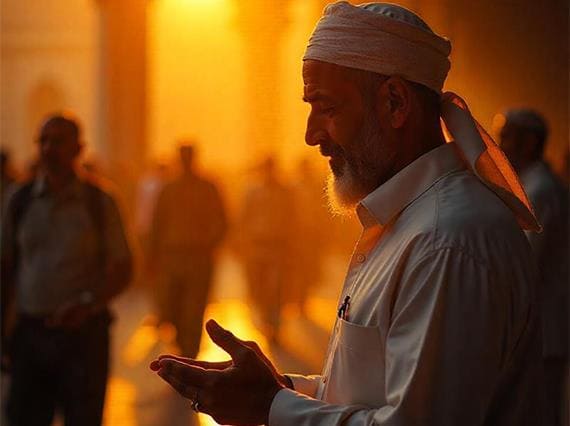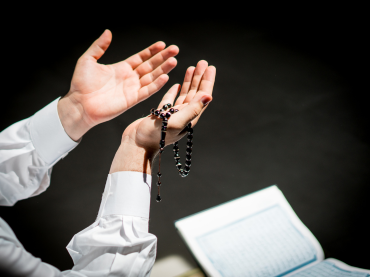
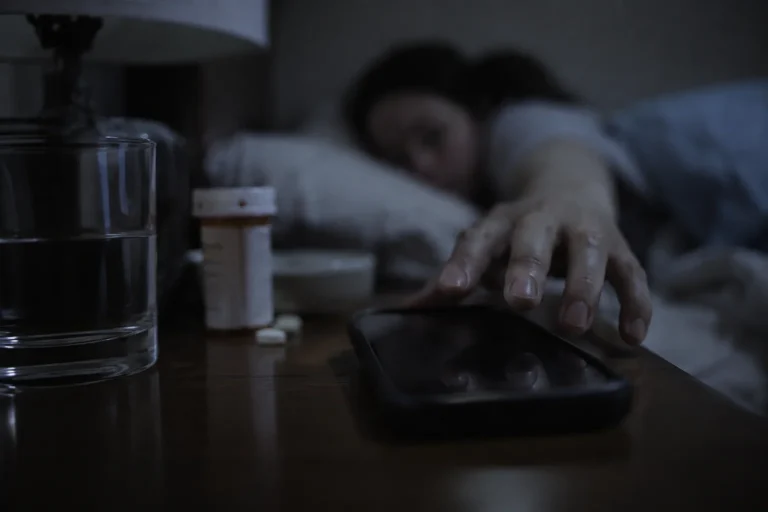
Allah has placed a cure for every illness — so a cure is something you go and look for. The Prophet ﷺ was himself treated for shaqiqah, a one-sided headache. Take the medicine on time, and recite the dua for pain relief. They are one act, not two.
What is the best dua for a headache? Place your right hand on the painful spot, say Bismillah three times, then recite seven times: A’udhu billahi wa qudratihi min sharri ma ajidu wa uhadhir — “I seek refuge in Allah and in His Power from the evil of what I find and what I fear” (Sahih Muslim 2202). Recite it alongside medical treatment, never instead of it.
Table of Contents
- Allah Has Placed a Cure — So Go and Find It
- The Prophet ﷺ Had a One-Sided Headache
- The Duas to Recite While the Medicine Works
- What Happens Before the Pain Starts
- When a Headache Is an Emergency
- Prevention: Science and Sunnah Agree
- Comfort Measures That Actually Help
- The Verse Everyone Quotes Wrongly
- Conclusion
Allah Has Placed a Cure — So Go and Find It
Walk into almost any Muslim hospital and this verse is on the wall:
وَإِذَا مَرِضْتُ فَهُوَ يَشْفِينِ
Wa idha maridtu fahuwa yashfin
“And when I am ill, it is He who cures me.” (Surah Ash-Shu’ara 26:80)
Look at how Ibrahim (peace be upon him) speaks. The illness, he attributes to himself. The healing, to Allah. Imam As-Sa’di calls this pure adab. The doctor is a means. The tablet is a means. The Healer is One.
And that cure is meant to be chased. There is no disease Allah created except that He created its treatment. When the Companions asked outright whether to use medicine, the Prophet ﷺ answered:
“Make use of medical treatment, for Allah has not made a disease without appointing a remedy for it, with the exception of one disease, namely old age.” (Sahih al-Bukhari 5678 · Sunan Abi Dawud 3855)
Going to a doctor is not a gap in your faith. It is the Sunnah.
The Prophet ﷺ Had a One-Sided Headache
This is the part almost every article misses. And it settles the whole argument.
احْتَجَمَ النَّبِيُّ ﷺ فِي رَأْسِهِ وَهُوَ مُحْرِمٌ مِنْ شَقِيقَةٍ كَانَتْ بِهِ
“The Prophet was cupped on his head while in ihram, because of a shaqiqah he had.” (Sahih al-Bukhari 5700–5701)
Now look at that word. Shaqiqah comes from the root meaning to split in half. Pain in one half of the head — and it is the exact word Arabic still uses today for migraine.
So the Sunnah already names the condition. And in the same narration, the Prophet ﷺ takes a physical treatment for it. Not dua alone.
If anyone tells you that reaching for medicine shows weak tawakkul, this narration answers them.
The Duas to Recite While the Medicine Works
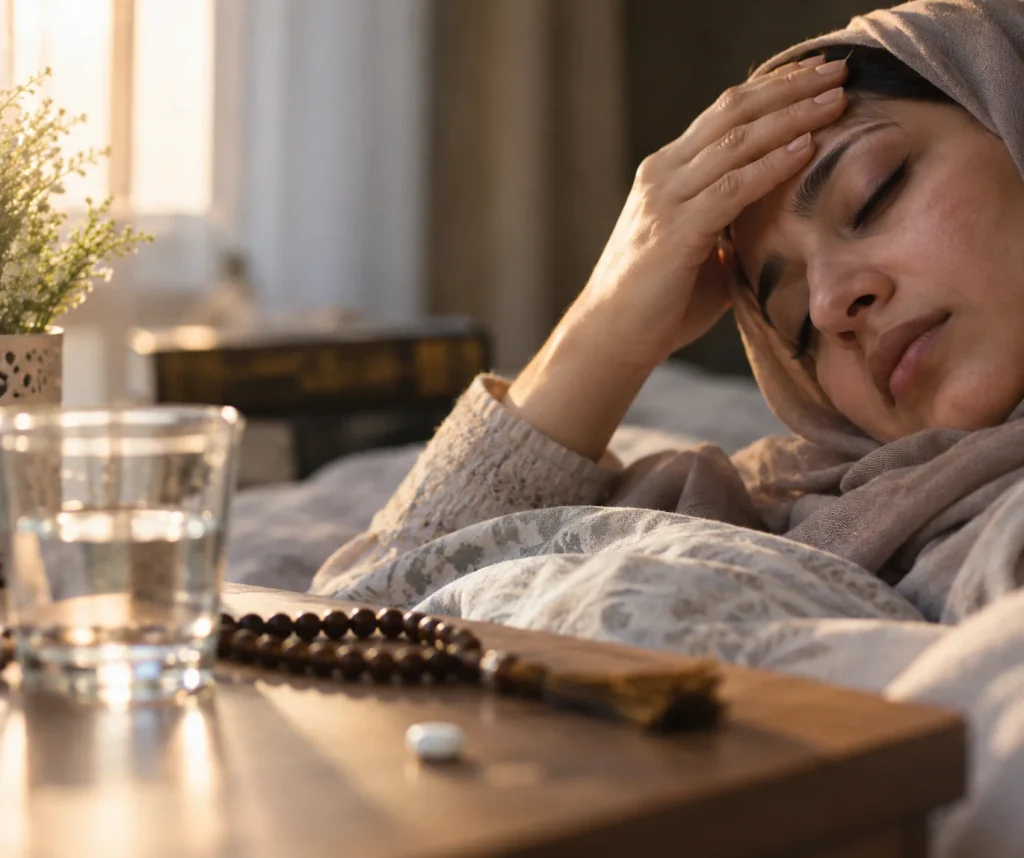
Take your medication at the first sign. Then, while it works, recite.
1. Hand on the Pain
Say Bismillah three times, then this seven times:
أَعُوذُ بِاللَّهِ وَقُدْرَتِهِ مِنْ شَرِّ مَا أَجِدُ وَأُحَاذِرُ
A’udhu billahi wa qudratihi min sharri ma ajidu wa uhadhir
“I seek refuge in Allah and in His Power from the evil of what I find and what I fear.” (Sahih Muslim 2202)
2. The Dua for the Sick
اللَّهُمَّ رَبَّ النَّاسِ، أَذْهِبِ الْبَأْسَ، اشْفِ أَنْتَ الشَّافِي، لَا شِفَاءَ إِلَّا شِفَاؤُكَ، شِفَاءً لَا يُغَادِرُ سَقَمًا
Allahumma Rabban-nas, adhhibil-ba’s, ishfi Antash-Shafi, la shifa’a illa shifa’uk, shifa’an la yughadiru saqama
“O Allah, Lord of mankind, remove the harm and cure. You are the One who cures. There is no cure except Your cure — a cure that leaves no illness behind.” (Sahih al-Bukhari 5675)
Sit with that middle line for a second. There is no cure except Your cure. The tablet is the means. The cure is His.
3. Jibril’s Ruqyah
For ruqyah for headache, and for every harm:
بِسْمِ اللَّهِ أَرْقِيكَ مِنْ كُلِّ شَيْءٍ يُؤْذِيكَ، مِنْ شَرِّ كُلِّ نَفْسٍ أَوْ عَيْنِ حَاسِدٍ، اللَّهُ يَشْفِيكَ، بِسْمِ اللَّهِ أَرْقِيكَ
Bismillahi arqika min kulli shay’in yu’dhika, min sharri kulli nafsin aw ‘ayni hasid, Allahu yashfik, bismillahi arqik
“In the name of Allah I perform ruqyah for you, from everything that harms you, from the evil of every soul or envious eye. May Allah cure you.” (Sahih Muslim 2186)
4. Three More From the Sunnah
- Al-Fatihah as ruqyah. The Companions recited it over a sick man and he recovered. The Prophet ﷺ only asked, “How do you know that it is a ruqyah?” (Sahih al-Bukhari 5736).
- The Mu’awwidhat. Recite Al-Ikhlas, Al-Falaq and An-Nas, blow into your palms, wipe over your face and head (Sahih al-Bukhari 5748).
- For someone else. The Prophet ﷺ said that whoever visits a sick person whose time has not yet come, and says this seven times beside them, Allah will cure them of that illness:
أَسْأَلُ اللَّهَ الْعَظِيمَ رَبَّ الْعَرْشِ الْعَظِيمِ أَنْ يَشْفِيَكَ
As’alullaha al-‘Azim, Rabbal-‘Arshil-‘Azim, an yashfiyak
“I ask Allah, the Mighty, Lord of the Mighty Throne, to cure you.” (Sunan Abi Dawud 3106 · graded sahih by al-Albani)
5. How to Perform Ruqyah at Home — Step by Step
- Sit quietly. Place your right hand on the painful spot.
- Recite Al-Fatihah once, then Al-Ikhlas, Al-Falaq and An-Nas three times each.
- Follow with the dua for the sick above — Adhhibil-bas, Rabban-nas…
- Blow lightly into your cupped palms and wipe them over your head, face and neck.
- Or over water: recite the same, blow gently over a glass, and drink it slowly — useful for a child or elderly parent who can’t recite themselves.
Blowing over water has a basis in the Sunnah:
“The Prophet ﷺ was brought a sick person, so he mixed water, blew into it, then poured it over him.” (Sunan Abi Dawud 3885)
The intention stays simple: you’re asking Allah, not the water.
Reciting with proper pronunciation (makharij) enhances the clarity and intent of ruqyah. If you or your children need help learning correct Tajweed and authentic daily supplications, platforms like Qari For Kids offer one-on-one online guidance with qualified Qur’an tutors.
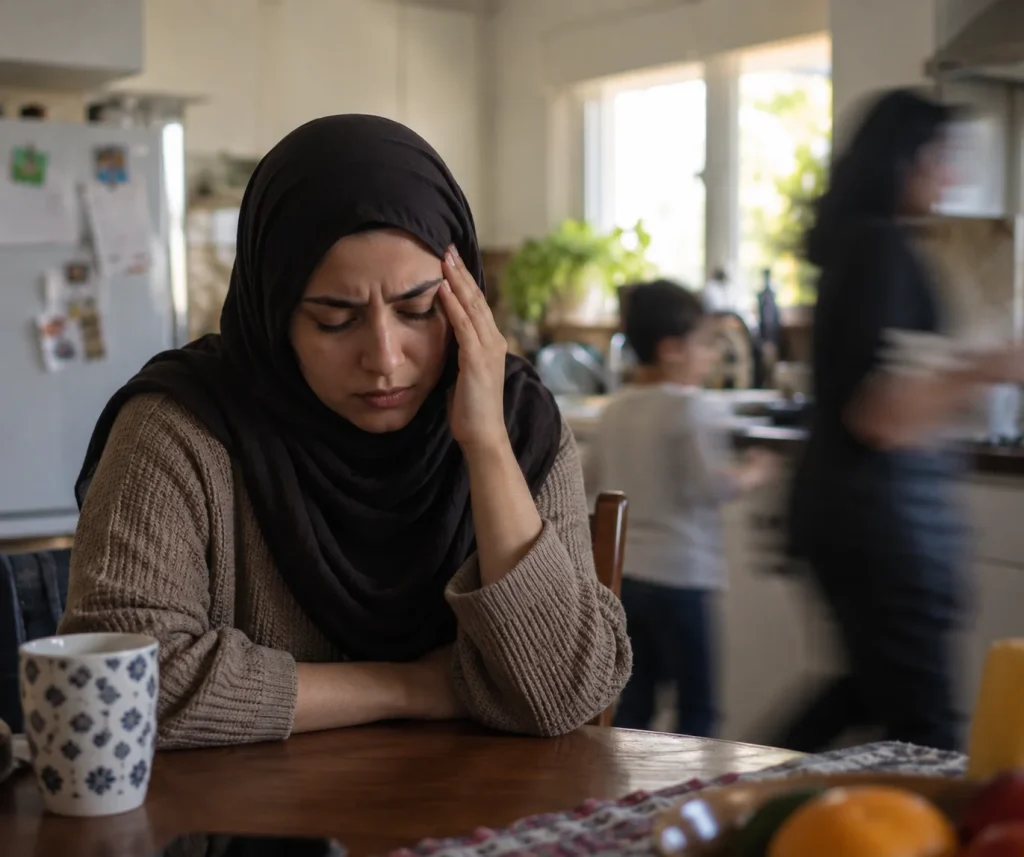
What Happens Before the Pain Starts
Families often get this wrong.
Hours — sometimes a full day — before the pain arrives, the mood drops. Irritability sets in, and nothing sounds acceptable.
That’s not bad character. It’s a documented phase called the prodrome — starting one to two days early, with mood swings, light and sound sensitivity, and poor concentration.
Tell your family this. It changes how they treat you.
Then the pain builds slowly — one spot, one side, like a nail driven in. Someone who’s had it for years described it exactly that way.
The NHS describes it the same way: a throbbing pain usually on one side of the head.
About one in four also get aura first — flashing lights, zigzag lines, or tingling up the arm, lasting up to an hour.
The usual triggers, per Mayo Clinic and Cleveland Clinic: overthinking, travel, crowds, loud noise, and skipped sleep or meals. Once or twice a month is typical — some people get it several times a week.
Timing matters as much as the trigger. Take the medication the moment the pain starts — once it escalates, it’s much harder to control, and treating it early is what makes it possible to stop.
Delaying isn’t tawakkul. It’s neglecting the means Allah placed in front of you.
Take the medicine. Then recite.
When a Headache Is an Emergency
If it’s any of these, don’t stop to recite first — get help right away.
- The worst headache of your life, or one that hits suddenly and hard
- Headache with fever, stiff neck, confusion, seizures, double vision, weakness, numbness or slurred speech
- Headache after a head injury, especially if it worsens
- Headache that worsens when you cough, strain or move suddenly
- Any change in your usual pattern
These can mean stroke or meningitis. Make dua in the car on the way.
And painkillers on most days can themselves cause medication-overuse headache. See a doctor rather than raising the dose.
Prevention: Science and Sunnah Agree
- Sleep. A steady schedule is one of the most established preventives — too little and too much both trigger attacks. The Sunnah already builds it: sleeping early after Isha, the qaylulah, the sleeping adhkar.
- Water and meals. Dehydration and skipped meals are recognised triggers. The Prophetic guidance on filling the stomach in thirds — food, drink, breath — is the same discipline.
- Noise, light, heat. Loud sound and bright light are top triggers. The Sunnah emphasis on lowering the voice is not only manners; it is mercy. And a dark, quiet room is both standard medical advice and the ideal setting for ruqyah. One action, not two.
- Mental load. Overthinking is the trigger people report most. Breathing work helps clinically; so does dhikr.
Every measure above has scholarly backing too:
“Supplication and physical treatment are companions in healing, never rivals.” (Ibn al-Qayyim, At-Tibb an-Nabawi)
“A man was bitten, and the Qur’an was recited over him — and he was healed.” (Sahih al-Bukhari 5736)
Comfort Measures That Actually Help
Practical techniques — not Sunnah remedies. Keep the categories separate.
- The LI-4 (Hegu) point. The web between thumb and index finger. Press firmly with the opposite thumb for one to three minutes, then switch hands (Memorial Sloan Kettering). Avoid in pregnancy.
- A cold compress on the forehead or the back of the neck
- Gentle massage of the temples and the base of the skull
- Ginger, coriander soaked with raisins, coconut water, black cardamom — comfort, not treatment
Pair each one with quiet dhikr. That is the whole idea.
The Verse Everyone Quotes Wrongly
Blog after blog offers this as a Quranic verse for headache:
لَا يُصَدَّعُونَ عَنْهَا وَلَا يُنْزِفُونَ
“They will have no headache from it, nor will they be intoxicated.” (Surah Al-Waqi’ah 56:19)
It contains the word suda’, headache. That is the entire reason it gets quoted.
But read what it describes: the wine of Paradise, which causes neither headache nor intoxication. Same with As-Saffat 37:47. No classical scholar treats either as a remedy.
Recite the Qur’an for shifa, absolutely. Just use the verses the Sunnah points you toward: Ash-Shu’ara 26:80, Al-Isra 17:82, Yunus 10:57, Fussilat 41:44.
Conclusion
Carry your medication. Take it the moment the pain begins. Then put your hand on your head, say Bismillah, and ask the One who actually heals.
If the pain lifts, that is from Allah. If it stays a while longer, the dua is still doing one of three things, and the pain itself is washing something away.
Takeaway: The tablet and the dua are not competing options. They are the same act of obedience, done together — and when I am ill, it is He who cures me.